CarePath turns fragmented patient records into usable clinical insights, helping health teams prepare for complex and newly attached patients faster and make better-informed decisions, by cutting short the manual reviewing time while improving accuracy.
Carepath clarifies the patient journey for care teams
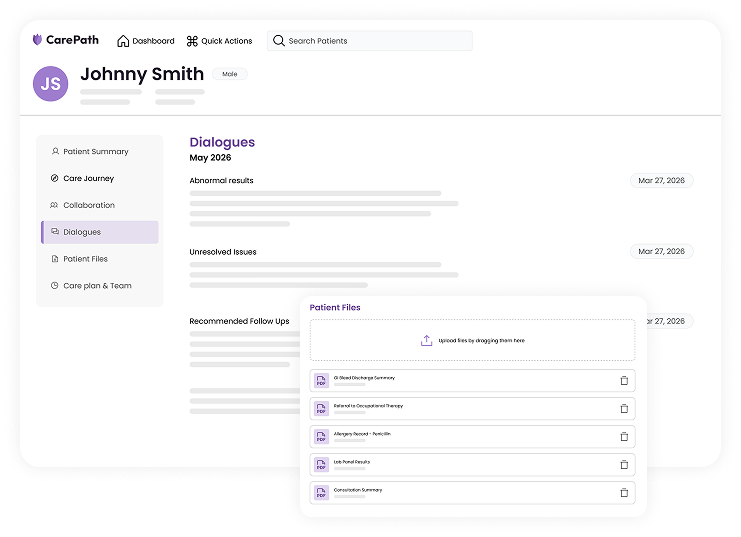






Reduce the time spent searching through lengthy patient records before care..

Start from an organized longitudinal view before the clinical encounter..

Every fact surfaced by CarePath includes the source citation..
For newly attached and complex patients, the information may span years of EMR data, consultation notes, hospital reports, diagnostics, referrals and scanned documents. Before the visit can begin, clinicians still have to assemble the story themselves.


Newly attached and complex patients can arrive with lengthy histories spread across multiple systems, documents and formats.

Medications, diagnoses, investigations, consultations and changes over time rarely appear together.

Teams search documents, extract clinical facts and piece together the patient history before the clinical encounter can begin.

Time spent finding and organizing information is time that cannot be spent reviewing, deciding and delivering care.
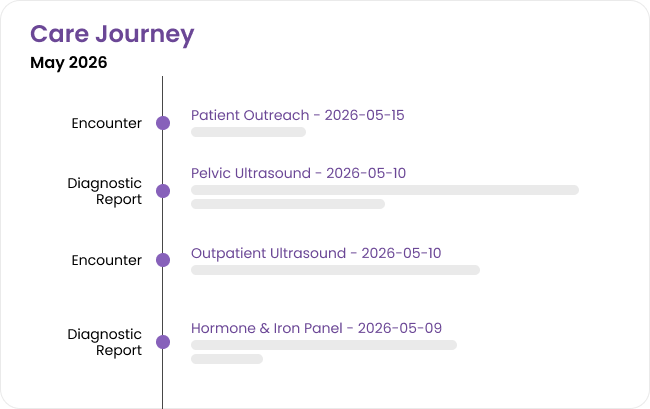
CarePath reduces the manual work required to understand a complex patient record while keeping clinicians in control of clinical review.
Get startedCarePath reduces the manual work required to understand a complex patient record while keeping clinicians in control of clinical review.
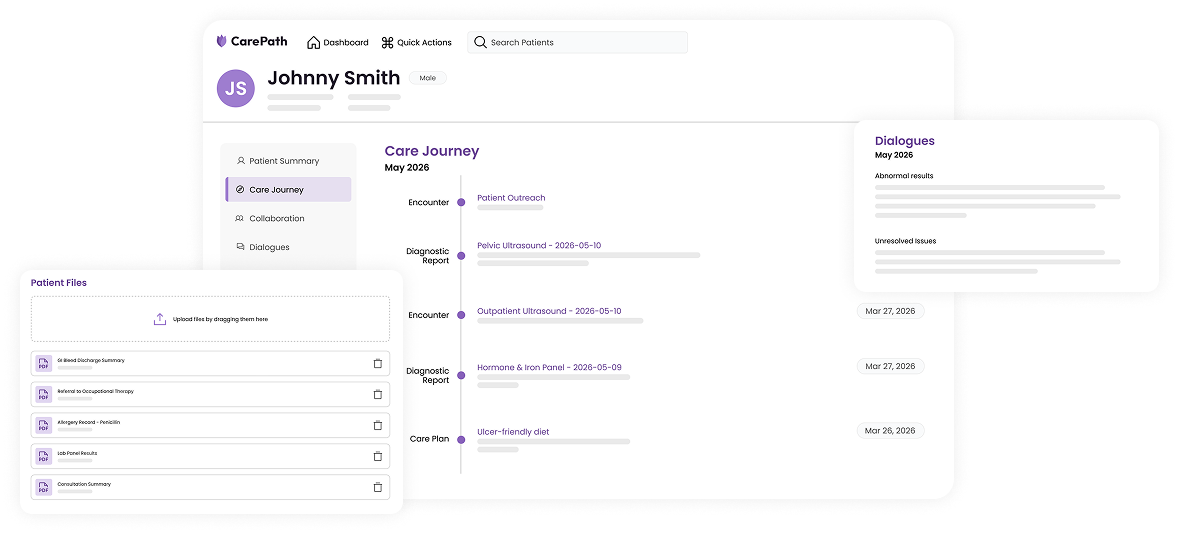

Reduce the manual work of searching documents, extracting clinical information and reconstructing patient history.

Bring current, historical and incoming patient information together so teams can make better use of the data they already receive and retain.

Give clinicians a consistent starting point for review, with important information linked back to the underlying source.
CarePath is especially useful in community health workflows where clinicians need to understand large amounts of patient information before or during care.
Get started

Understand newly attached patients without manually reconstructing years of clinical history.

Give clinicians an organized patient view before appointments, reviews or clinical interactions.

Surface the information that matters across long histories, multiple conditions and multiple sources.

Turn incoming patient information into a more structured, review-ready clinical picture.

Help the next care team understand what has happened and what information may still require attention.

Make years of patient history easier to explore without opening documents one by one.
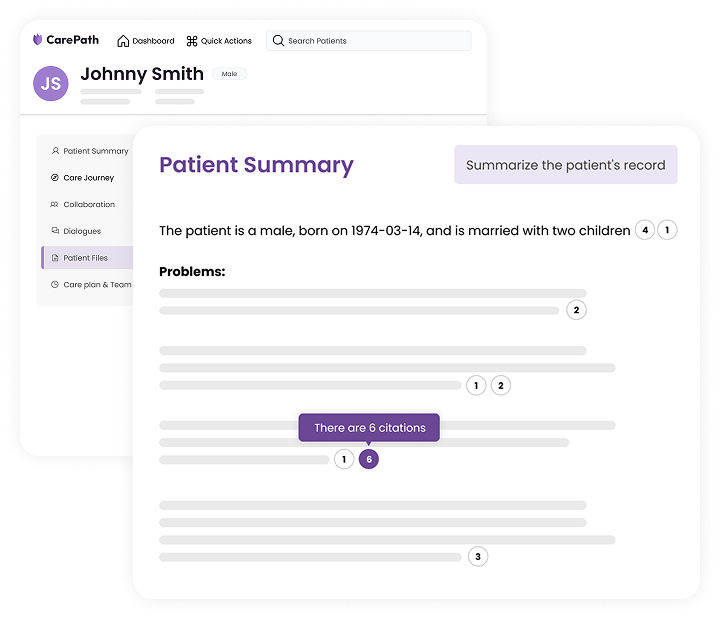
Healthcare AI must do more than produce a convincing answer. CarePath is designed to keep the clinician connected to the underlying clinical information.

In real-world use, CarePath has helped clinicians turn lengthy, fragmented patient records into an organized clinical view for review and validation.
See it in actionReduce the time required to review complex patient information.
Recover time otherwise spent searching and reconstructing records.
Give clinicians an organized starting point for understanding the patient.
Keep the underlying clinical information available for validation.
Results depend on workflow, patient complexity, data availability and implementation.

Spend less time searching the record and more time reviewing, validating and applying clinical judgement.

Reduce repetitive information work and give teams a more consistent starting point for reviewing complex patients.

Recover time consumed by information work and redirect it toward higher-value clinical activity.

Keep clinicians in control with source-linked information, auditability and an approach designed to work with existing healthcare environments.
CarePath can work across current and archived information, helping health care teams make better use of the clinical history already available to them.
Understand longitudinal information without opening records one by one.
Add intelligence over information organizations already preserve.
CarePath works with existing clinical information rather than asking teams to recreate it.
Move from knowing which document to find toward asking the clinical question that matters.
See how CarePath can reduce manual pre-visit review and help your team start with a source-linked clinical view of complex and newly attached patients.
